Report
Gold Loses Its Shine (For Now): Why Prices Crashed From Record Highs -And Why Families Selling Old Jewellery
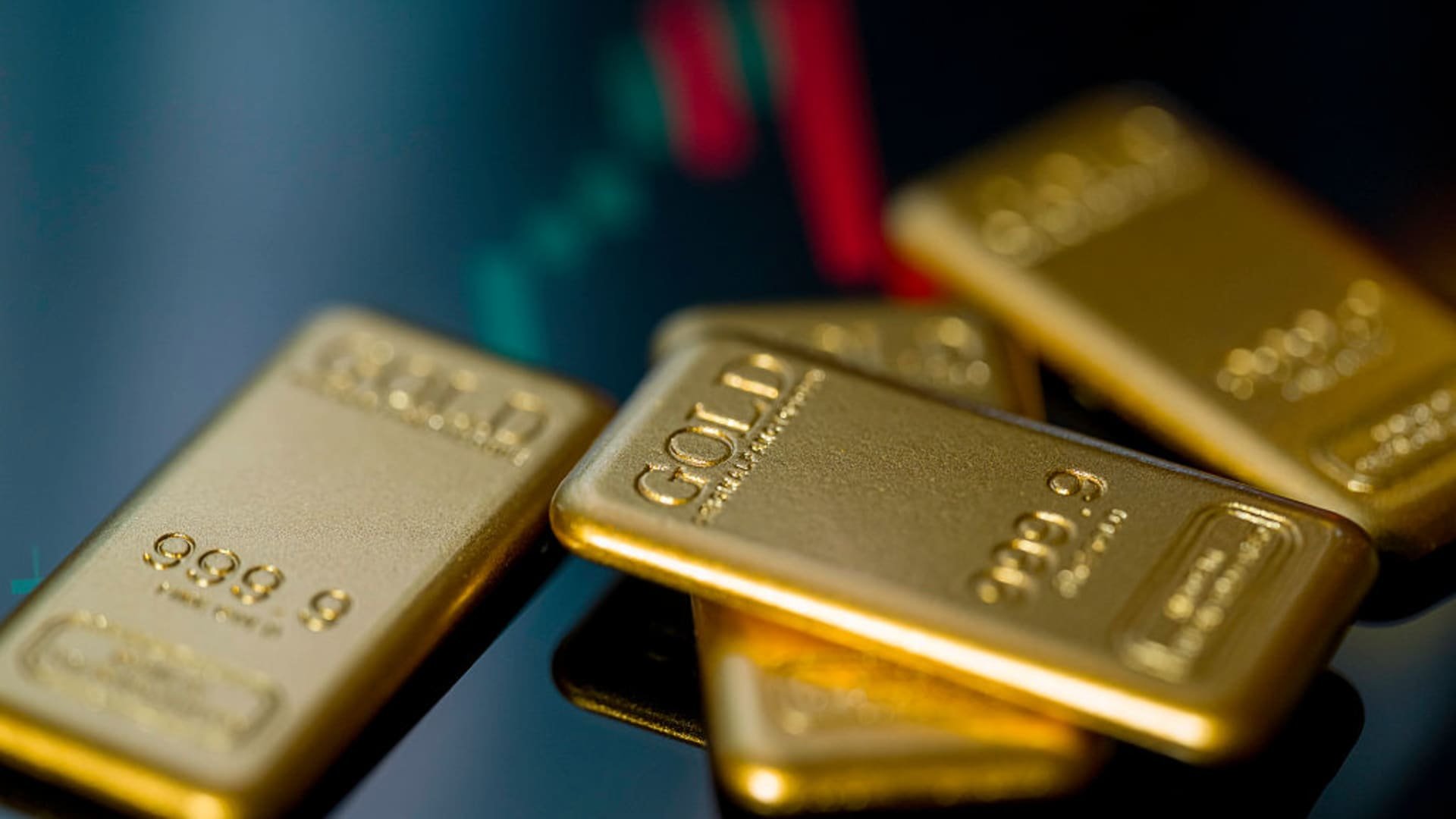
Gold has had a wild ride this year. In January 2026, it touched an all-time record high of nearly $5,590 an ounce - roughly ₹1.8 lakh for 10 grams in India. But since then, prices have fallen sharply, dropping about 25% to trade closer to ₹1.4 lakh per 10 grams. For anyone who bought gold at the peak, or is wondering whether to buy now, here is what is going on, explained simply.
Why Did Gold Fall So Much?
The biggest reason is interest rates in America. Earlier this year, everyone expected the US central bank, the Federal Reserve, to cut interest rates soon. Lower rates are usually good news for gold, because gold pays no interest, so it becomes more attractive when other investments pay less. But as 2026 went on, inflation in the US stayed stubbornly high, and hopes for quick rate cuts faded. Some investors even started worrying about rate hikes instead. That pushed money out of gold and into interest-paying assets like bonds, dragging gold prices down - including one particularly sharp monthly fall in March, the worst since 2013.
Why Are Indian Families Selling Their Gold?
Here's a trend playing out in homes across India right now: people are pulling out old jewellery, coins, and bars - and selling them for cash instead of exchanging them for new ornaments. According to industry data, Indian households sold nearly 50 tonnes of gold between April and June 2026, a jump of 43% compared to the same period last year.
The logic is simple. Even after the recent fall, gold prices are still far higher than what most families paid for their jewellery years ago. With fears that prices could slide further, many are choosing to lock in their profits now rather than risk holding on. Organised gold-buying companies are seeing a real boom in business as a result, with some reporting a 40% jump in old gold collections.
What About Big Investors and Central Banks?
While ordinary households are cashing out, the picture among big institutional players is more mixed. Some central banks have sold gold this year to manage other economic pressures - Turkey, for example, sold around 60 tonnes of its reserves in March. But other countries, particularly China, have continued quietly buying gold in large quantities to reduce their dependence on the US dollar. Overall, central banks still bought more gold than they sold in the first quarter of the year, showing that big institutional appetite for gold has not disappeared - it has just slowed down.
So Where Are Prices Headed Next?
This is where experts genuinely disagree - and disagree by a lot. Major global banks are split on how quickly gold will recover. Some, like Morgan Stanley, are cautious, expecting prices to hover in a modest range this year. Others, like JP Morgan, remain very bullish, expecting prices to climb well beyond previous highs by the end of 2026 and into 2027. Between these two camps, forecasts for the rest of this year alone range from roughly $4,900 to over $6,300 an ounce - a genuinely wide gap that shows just how uncertain the near-term outlook is.
Looking further ahead - toward 2028, 2029, and 2030 - most long-term forecasts turn more clearly positive, with some analysts projecting gold could eventually reach $7,000 to $9,000 an ounce. The reasoning: governments worldwide are running large deficits and printing more money, which erodes the value of paper currency over time, while gold remains a safe, neutral asset that cannot be frozen or devalued by any single country's policy decisions.
The Bottom Line for the Common Man
Gold isn't crashing - it's cooling off after an extraordinary run-up. The short-term direction depends heavily on what the US Federal Reserve does with interest rates over the coming months. Meanwhile, many Indian households are treating the current dip as a good moment to book profits on old, unused gold rather than hold and hope for more. Whether that turns out to be the right call depends on which set of forecasters - the cautious ones or the bullish ones - turns out to be correct. For now, the safest advice for an ordinary saver is the oldest one: don't panic-buy at the top, don't panic-sell at every dip, and treat gold as a long-term hedge rather than a quick way to get rich.