Report
Why ISRO is Now "Renting" Out Its Launchpads (and Why It’s a Masterstroke)
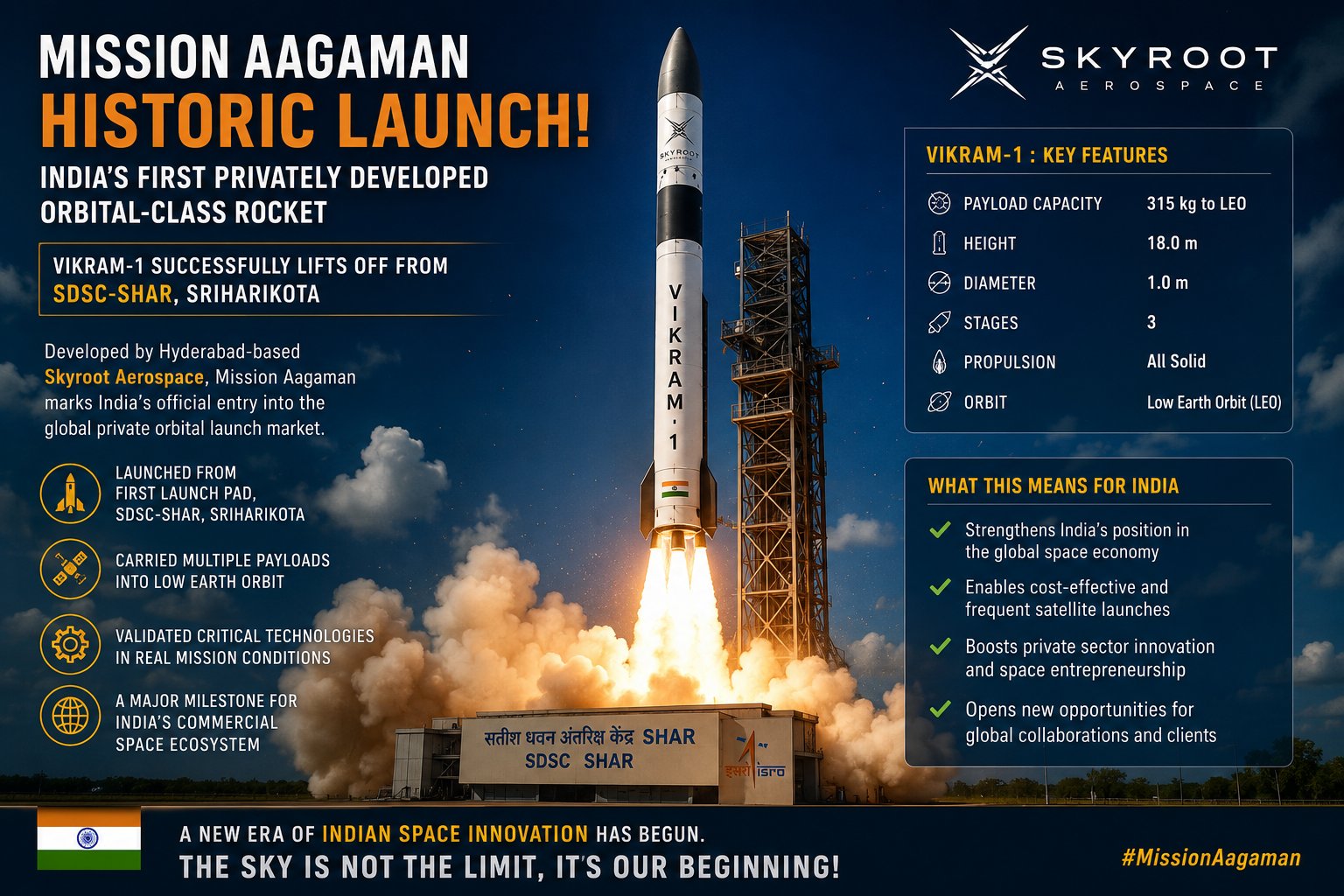
The recent successful launch of Vikram-1 by space startup Skyroot Aerospace has taken India by storm. For the first time, a completely private Indian company designed, built, and launched a rocket into orbit on its very first try. While this achievement feels like an overnight miracle, it is actually the result of a massive shift in how India finances its space dreams. It marks the beginning of an era where the public and private sectors pool their resources to turn India into a global space superpower.
To truly appreciate this milestone, we must look at the financial reality of the Indian Space Research Organisation (ISRO). In the latest national budget, the government allocated exactly 13,705.63 crore rupees to the Department of Space. While that sounds like an enormous sum of money, it is tiny on the global stage. The American space agency, NASA, receives an annual budget of over 25 billion dollars (more than 2,00,000 crore rupees), and China spends an estimated 14 to 18 billion dollars annually. Despite operating with less than 7% of NASA's budget, ISRO consistently delivers world-class missions like the Chandrayaan moon landings. However, with ambitious new goals like the Gaganyaan human spaceflight mission-which takes up a major chunk of the 10,397.06 crore rupees set aside for space technology-ISRO's budget is being stretched to its absolute limit.
This financial pressure is exactly why the Indian government changed its rules. Under the new Indian Space Policy, ISRO has essentially started operating a "pay-and-use" model, renting out its highly advanced infrastructure to private companies. Building launchpads, rocket testing grounds, and deep-space tracking systems takes decades and billions of taxpayer rupees. Instead of forcing young Indian space startups-which have grown explosively from just 1 in the year 2014 to over 400 today-to raise impossible amounts of money to build duplicate launchpads, the government allows them to rent ISRO's world-class facilities for a fee.
This rental model works like a unique form of national crowdfunding. Indian taxpayers funded the foundation-the multi-crore launchpads and laboratories-over the last 50 years. Now, private startups are raising their own capital from global investors to build the actual rockets. For instance, Skyroot raised roughly 800 crore rupees from private investors leading up to this flight. When a startup rents ISRO's facilities, the rental money goes right back into the government’s pockets, helping fund ISRO's next big scientific leaps. This includes highly anticipated deep-space projects like the approved 2,104.06 crore rupee Chandrayaan-4 lunar sample return mission and the 824 crore rupee Venus Orbiter Mission. The heavy financial risk of commercial satellite launches is successfully shifted away from the taxpayer and onto private investors.
The Vikram-1 launch itself was the ultimate proof that this crowd-funded teamwork works. The 22-meter-tall rocket, designed to carry up to 350 kilograms of payload into a stable 450-kilometer Low Earth Orbit, faced a few tense moments during its flight. It weathered a brief countdown hold just 5 minutes before its initial liftoff time due to a ground software glitch, and experienced some minor tumbling in space before its thrusters stabilized it. Despite these minor hiccups, it successfully placed its payloads into orbit. By doing so on its very first attempt, it made India only the third country in the world, after the US and China, to possess a fully functional private space launch capability.
Ultimately, this new era is changing ISRO's identity for the better. Instead of acting as a routine commercial delivery service for satellites, ISRO can now step back and focus its budget purely on deep-space exploration, planetary science, and advanced research. Meanwhile, private enterprises will handle the day-to-day commercial space business, helping grow India's space economy from its current value of 8.4 billion dollars to a projected 45 billion dollars by 2030. By opening its doors and renting its space, ISRO hasn't just saved public money-it has fueled a massive domestic space industry powered by the ultimate combination of public infrastructure and private innovation.