Report
Government Fixes Retail Prices for 39 Essential Drug Formulations
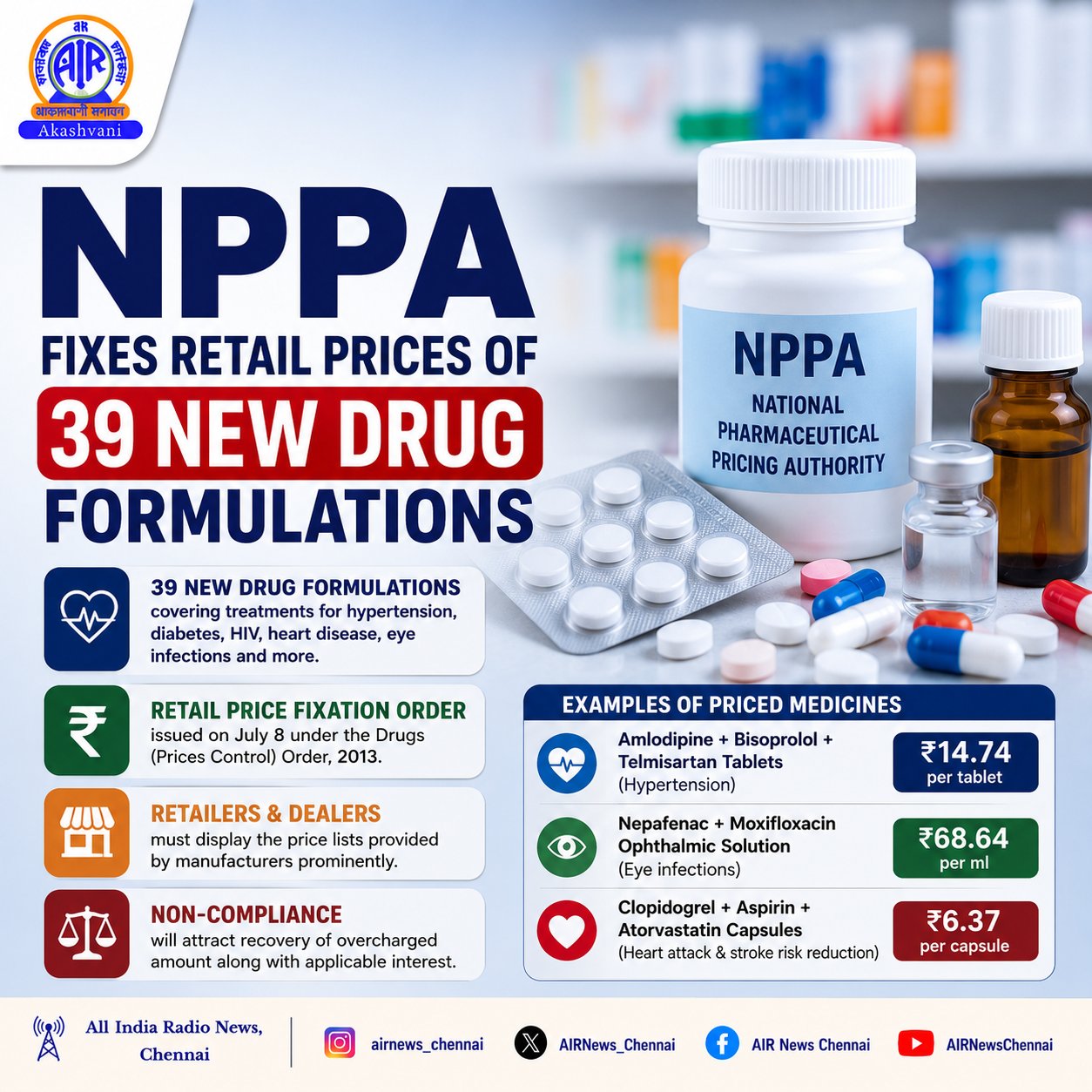
In a move to ensure affordable and uniform access to essential medicines, the National Pharmaceutical Pricing Authority (NPPA) has issued a notification fixing the retail prices for 39 new drug formulations. This directive, issued on July 8, 2026, under the Drugs (Prices Control) Order (DPCO), 2013, establishes maximum retail prices that manufacturers and marketing companies are legally required to follow. These prices are exclusive of the Goods and Services Tax (GST).
The order covers a broad spectrum of medical treatments, targeting conditions such as hypertension, cardiovascular disorders, diabetes, bacterial infections, epilepsy, eye disorders, pain management, HIV, and certain cancers. High-value medicines are included in this regulatory framework to prevent excessive pricing; most notably, the retail price of Tenecteplase (TNK-tPA) injection 50 mg-a life-saving clot-busting agent used during heart attacks-has been fixed at Rs. 60,238.27 per vial. Other significant price fixations include the Darunavir, Ritonavir, and Dolutegravir combination kit for HIV treatment at Rs. 330.40 per kit, and Imatinib oral solution for certain cancers at Rs. 59.61 per ml.
The list also addresses more common therapeutic needs. For example, the price of Amlodipine, Telmisartan, and Metoprolol Succinate (Extended Release) tablets has been set at Rs. 12.03 per tablet, while various anti-diabetic combinations featuring drugs like Dapagliflozin, Empagliflozin, and Sitagliptin have been brought under the new price caps. Ophthalmic preparations, such as Nepafenac and Moxifloxacin eye solution, are now capped at Rs. 68.64 per ml, and Netarsudil and Latanoprost ophthalmic solution is priced at Rs. 362.57 per ml.
The NPPA has emphasized that this is a "retail price fixation" order for new formulations rather than a general price reduction, aimed at promoting transparency and preventing the overcharging of patients. Under the DPCO, 2013, manufacturers are mandated to issue revised price lists through the Integrated Pharmaceutical Database Management System (IPDMS) and provide these to State Drug Controllers. Retailers and dealers are also legally required to prominently display these updated price lists at their business premises to ensure they are easily accessible to the public.
Failure to comply with these notified prices will result in strict action. Companies found overcharging will be liable to deposit the excess amount collected, along with applicable interest, as per the provisions of the Essential Commodities Act, 1955.